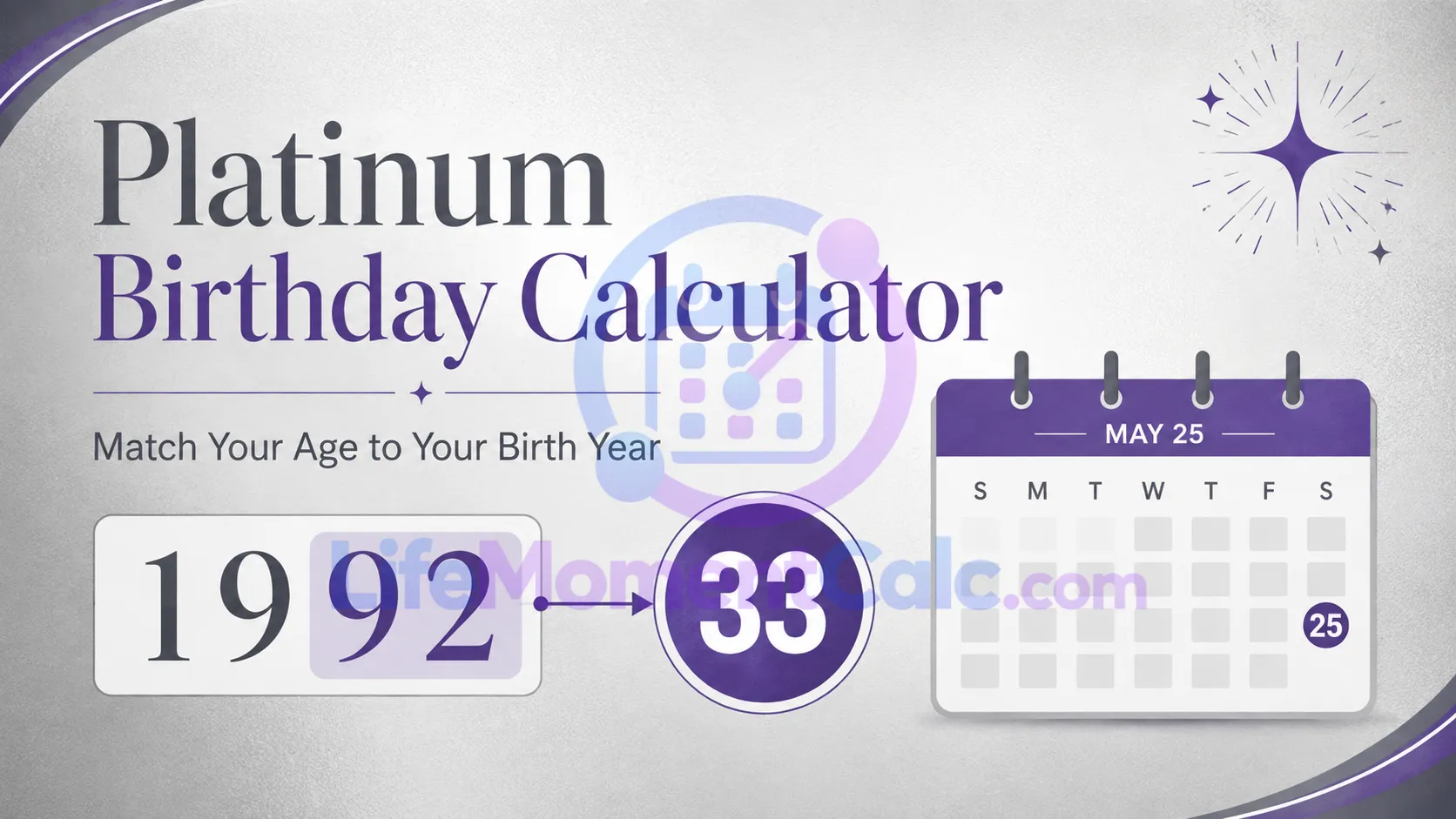
A Platinum Birthday Calculator applies an informal number-matching rule: the milestone occurs when the age you turn matches the final two digits of your birth year.
A person born in 1995 has a platinum birthday at age 95. Someone born in 2007 has it at age 7. Because the phrase has competing definitions, the calculator always displays the exact rule used.
Apply the final-two-digits convention transparently, including the ambiguous “00” case and milestone status. This tool uses the novelty convention in which a platinum birthday occurs when the age turned matches the final two digits of the birth year—for example, a 1995 birth maps to age 95 and a 2007 birth maps to age 7. Age zero is the day of birth, not an ordinal birthday. For a birth year ending in 00, this tool uses the 100th birthday and labels that choice. Other sources use “platinum birthday” differently, so the convention is always shown with the result.Platinum Birthday Calculator
Milestone details
Informal definition used
The “00” edge case
Definition Comes Before Calculation
“Platinum birthday” is not a standardized calendar term. Some sources use it differently or apply a similar rule under another milestone name.
This page uses only the final-two-digits convention. It does not claim that other informal traditions are incorrect; it makes the selected definition visible so the result can be understood.
Formula Used by the Platinum Birthday Calculator
First, the tool extracts the final two digits:
Final two digits = birth year remainder after division by 100
The milestone age is:
Platinum age = final two digits
There is one explicit exception:
If final two digits = 00, platinum age = 100
The milestone date is then:
Platinum birthday date = date of birth + platinum age in calendar years
Status is calculated by comparing that date with the selected calculation date in civil days.
Why a Year Ending in 00 Maps to Age 100
Age zero describes the date of birth; it is not normally called the “zeroth birthday.” Using age zero would make the milestone identical to the birth date and would not produce an ordinal birthday.
For births in 1900, 2000, or another year ending in 00, the calculator uses the 100th birthday. It states this choice in the result instead of hiding the ambiguity.
Understanding Early and Late Platinum Birthdays
The final two digits can produce a target anywhere from age 1 to age 100.
A 2004 birth maps to age 4, so that platinum birthday has already passed for most people born in that year. A 1988 birth maps to age 88, creating a future late-life milestone.
The calculator reports the original or future date without changing the rule to make the celebration more convenient.
Details Shown with the Milestone
The result includes:
- Platinum birthday date
- Target age
- Weekday
- Upcoming, today, or past status
- Days remaining or elapsed
- Current chronological age
- Total days lived
- Exact convention applied
A February 29 birth also requires a February 28 or March 1 policy when the target year is not a leap year.
Celebrating an Informal Number Pattern
For an upcoming milestone, the matching birth-year digits can support a number-based theme, a timeline of the person’s life, or a gathering centered on memories from the birth year.
When the date has passed, the result can still be used for a retrospective celebration. The factual date remains the original birthday on which the number match occurred.
For a milestone based on the day of the birth month rather than the year, use the Golden Birthday Calculator.
Keep the Convention Visible
The Platinum Birthday Calculator calculates calendar dates accurately, but “platinum” remains an informal label. It does not change age or create an official anniversary category.
Its credibility comes from disclosing the final-two-digits formula, resolving the 00 case deliberately, handling leap dates transparently, and retaining the true milestone even when it is far in the past or future.